
Why Japanese Gardening Tools Are Worth Every Penny (And Which Ones to Start With)
Japanese gardening tools are worth the investment because they’re designed for precision, durability, and an entirely different philosophy of garden work compared to Western tools. Rather than forcing through tasks with brute strength, these tools prioritize sharp edges, balanced weight distribution, and centuries-refined ergonomics that reduce fatigue and create cleaner cuts for healthier plants.
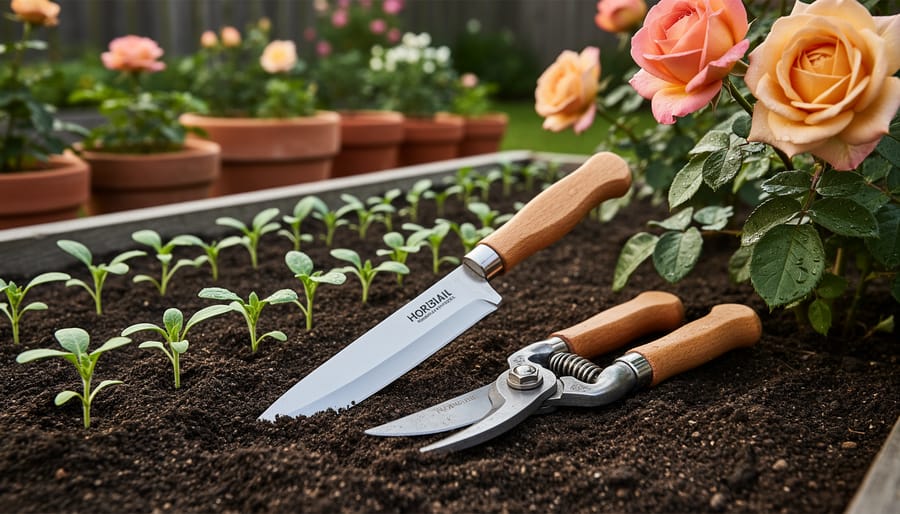
The difference becomes clear the first time you use a hori hori knife to transplant seedlings or a pair of Japanese pruning shears to deadhead roses. The blade geometry and steel quality mean less effort for better results. You’ll find options ranging from under $25 for quality entry-level pieces to professional-grade tools that can last decades with proper care.
What sets these tools apart isn’t just the craftsmanship. It’s the underlying approach to gardening itself. Traditional Japanese toolmaking emphasizes harmony between the gardener and the garden, creating implements that feel like natural extensions of your hand rather than mechanical interventions. The steel often comes from renowned forging regions like Sanjo or Sakai, where blacksmiths apply the same techniques used in samurai sword production to create exceptionally sharp, long-lasting edges.
For gardeners considering Japanese tools, the key question isn’t whether they work better (they do), but which ones match your specific gardening style and whether you’re ready to maintain them properly. A few essential pieces will transform how you work in the garden, but these aren’t impulse purchases. Understanding what makes each tool special, how to evaluate quality markers like steel type and handle construction, and learning from other gardeners’ experiences will help you build a collection that truly serves your needs rather than cluttering your shed.
What Makes Japanese Gardening Tools Different
Japanese gardening tools stand apart because they embody a fundamentally different approach to garden work. While Western tools often prioritize speed and power, Japanese designs focus on precision, control, and working with your body’s natural movements rather than against them. This philosophy stems from centuries of refinement in a culture where craftsmanship isn’t just a skill, it’s an art form passed down through generations of toolmakers.
The most striking difference lies in the direction of force. Japanese tools are engineered to work on the pull stroke, bringing the blade or cutting edge toward your body. Western tools typically push away from you, requiring more shoulder and back engagement.
This design choice affects everything from blade angles to handle shapes, creating tools that feel like natural extensions of your hand rather than implements you wrestle with.
Material selection reveals another core difference. Japanese gardening tools predominantly use high-carbon steel rather than stainless steel. Carbon steel holds a sharper edge longer and can be honed to a finer point, essential for the clean cuts and precise soil work these tools are known for. Traditional forging methods, some dating back to techniques used in sword-making, create blades with a harder cutting edge and a softer, more flexible spine. This combination prevents the brittleness that would cause a uniformly hard blade to chip or snap under pressure.
The cultural context matters too. In Japan, the concept of “mottainai”, regret over waste, drives the creation of tools built to last decades, not seasons. A well-maintained Japanese tool might serve three generations of gardeners. This longevity mindset influences every design decision, from the thickness of the blade tang to the wood species chosen for handles. You’ll notice consistent weight distribution, minimal decorative elements, and a focus on function that becomes apparent the moment you use one of these tools. They’re designed for daily use by professionals who depend on their reliability, then adapted for home gardeners who appreciate that same uncompromising quality.
Essential Japanese Tools Every Gardener Should Know
Hori Hori (Soil Knife)
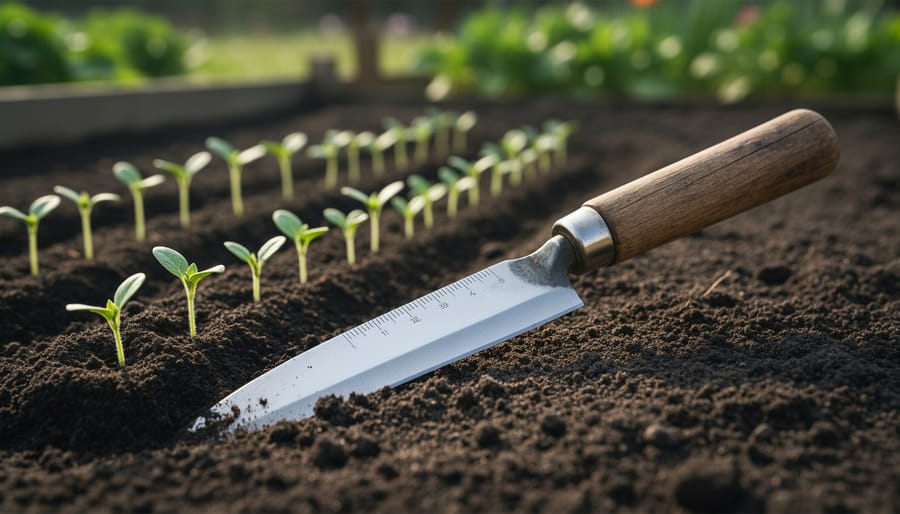
The hori hori sits at the heart of many Japanese gardeners’ tool collections, and once you’ve used one, you’ll understand why. This compact knife features a curved blade with one serrated edge and one straight edge, making it adaptable to whatever task you’re tackling. The serrated side cuts through stubborn roots and tough soil, while the straight edge handles precision work like dividing perennials or cutting twine.
Most hori hori knives include measurement markings etched along the blade, which proves surprisingly useful when you’re spacing bulbs or checking transplant depth for container gardening or raised bed prep. The pointed tip reaches into tight corners where other tools can’t fit, perfect for weeding between pavers or extracting deep taproots without disturbing surrounding plants.
You’ll find hori hori knives made from either stainless or carbon steel. Carbon steel versions require more maintenance but hold a sharper edge longer, while stainless models resist rust with minimal care. Quality varies widely across the market, so look for full-tang construction where the blade extends through the handle and secure riveting rather than glued components. A comfortable grip matters when you’re working for extended periods, so test the handle’s weight and balance if possible before committing. This single tool can replace several others in your kit, handling everything from transplanting seedlings to harvesting root vegetables.
Niwashi (Pruning Shears)
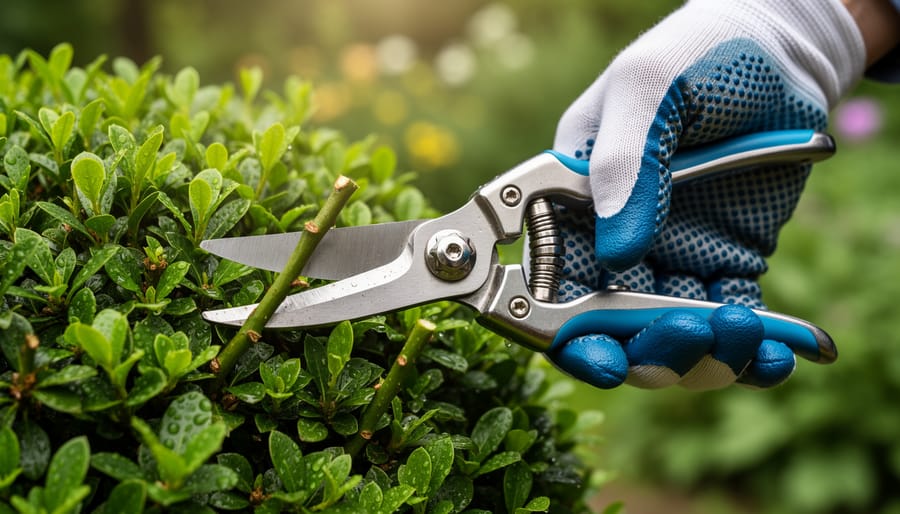
Japanese pruning shears, often called niwashi, feel different in your hand from the first cut. The weight sits closer to the blade, not the handles, which means less strain on your wrist during extended pruning sessions. This forward balance lets you make precise cuts with minimal effort, particularly useful when you’re shaping shrubs or harvesting herbs where accuracy matters more than speed.
The bypass blade design follows traditional Japanese knife-making principles: a sharp, slightly curved upper blade passes close against a thicker lower blade to create a clean slice rather than a crush. Western secateurs typically position blades at a steeper angle, which works well for thicker stems but can bruise delicate growth. Japanese shears angle their blades more gradually, allowing you to see exactly where you’re cutting and adjust mid-motion if needed.
The handles often feature a simple loop design without spring mechanisms, giving you complete control over blade pressure. This takes a bit of adjustment if you’re used to spring-loaded pruners, but many gardeners find the direct feedback helps them gauge stem thickness and avoid overcutting. The compact size makes them ideal for detailed work in tight spaces, deadheading roses, trimming bonsai, or harvesting vegetables without damaging nearby stems.
Nejiri Gama (Weeding Sickle)
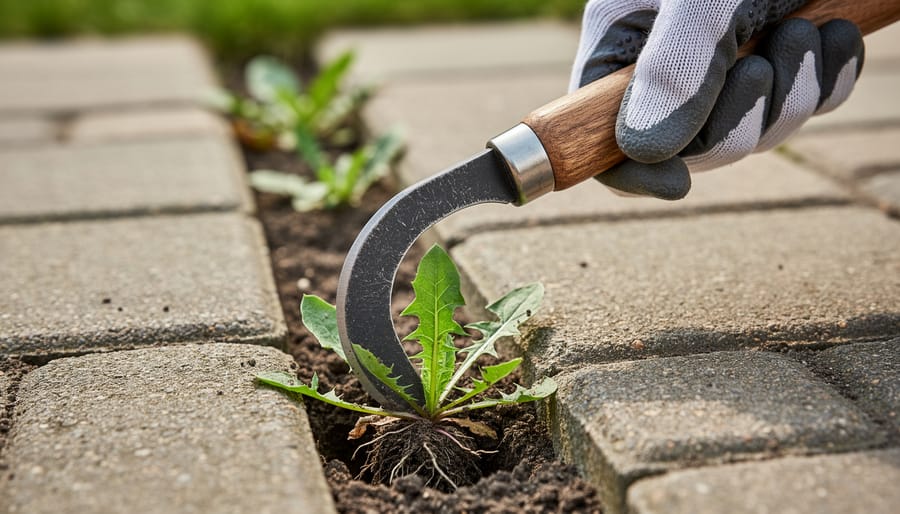
The nejiri gama’s defining feature is its angled blade, which sits at roughly 45 degrees to the handle rather than perpendicular like a standard hoe. This offset design lets you slide the sharp, pointed tip under weed crowns and slice through roots with a pulling motion, working from a comfortable standing or kneeling position without twisting your wrist. The blade’s curve follows the natural arc of your arm, making repetitive weeding less tiring than tools that force awkward angles.
Where the nejiri gama really shines is in confined spaces. That angled blade slips easily between paving stones, along fence lines, and around the bases of established plants where a straight hoe would scrape bark or miss tight corners entirely. The compact head navigates cracks and crevices that broader tools can’t reach, and the pulling action gives you control in dense plantings where a chopping motion risks collateral damage.
Most traditional versions feature a short wooden handle, though longer-handled variants exist for gardeners who prefer to stand while weeding larger areas. The blade material matters: carbon steel holds a sharper edge and bites through fibrous roots more cleanly, though it requires the same oiling and drying routine as other Japanese steel tools.
Kiribashi (Hand Rake)
The kiribashi stands apart from typical Western hand rakes through its remarkably compact design and resilient metal tines. Where bulkier rakes struggle in confined spaces, this lightweight tool excels at working the soil surface in containers, raised beds, and tight corners where larger implements simply won’t fit.
Traditional Japanese gardeners relied on the kiribashi for the meticulous surface cultivation that characterizes formal garden maintenance, gently breaking up crusty topsoil, incorporating compost into the upper layer, and creating the fine, level finish that makes Japanese gardens so visually appealing. The sturdy tines penetrate compacted soil without bending, yet they’re gentle enough for working around shallow roots and delicate seedlings.
For modern container gardeners, the kiribashi solves a persistent problem: refreshing potting soil without disturbing plant roots or making a mess. Its narrow head reaches into crowded planters, loosens surface crust that blocks water penetration, and blends in top-dressings with precision. Urban gardeners working balcony gardens or small raised beds find the tool’s compact size makes it easier to store and maneuver than full-sized garden rakes, while the balanced weight distribution reduces hand fatigue during repetitive tasks.
Hasami (Garden Scissors)
Hasami are the delicate precision instruments of the Japanese garden tool family. Unlike heavy-duty pruners, these lightweight scissors feature finger-loop handles that sit comfortably in your palm, allowing for extended use without hand fatigue. The slender blades make clean cuts on tender stems and foliage without crushing plant tissue, which matters when you’re harvesting herbs or removing spent blooms.
What sets hasami apart is their balance and control. You can maneuver them into tight spaces between overlapping leaves or work close to buds without accidentally damaging surrounding growth. They’re invaluable for bonsai enthusiasts who need surgical precision, but they’re equally useful for everyday tasks like snipping basil for dinner or tidying up houseplants.
The straight blade design differs from curved Western scissors, providing better visibility of your cutting line. Many gardeners keep a pair in their pocket for spontaneous deadheading walks through the garden. Just remember these are crafted for delicate work, not woody stems or thick branches. Use them for the tasks they’re designed for, and they’ll serve you reliably for years.
Kusakichi (Long-Handled Weeder)
The kusakichi transforms weeding from a backache-inducing chore into a standing, almost meditative task. This long-handled weeder features a sharp V-shaped or forked blade at the end of a shaft that typically reaches chest height, allowing you to work upright while targeting weeds at their roots. The leverage created by the long handle means you can extract deep-rooted intruders with a simple push-and-twist motion, no kneeling required.
For gardeners managing larger beds, pathways, or vegetable gardens, the kusakichi becomes invaluable during peak growing season when weeds seem to appear overnight. The standing position not only saves your knees and back but also gives you a better vantage point to spot problem weeds before they spread. Many gardeners find they can clear an entire border in the time it would take to weed half of it on hands and knees, making this tool particularly practical for those with mobility concerns or anyone who simply wants to enjoy their garden without the next-day soreness.
Choosing Quality Over Imitations
The explosion of interest in Japanese gardening tools has, unfortunately, attracted plenty of imitators. While these mass-produced alternatives often look similar at first glance, they rarely deliver the performance or longevity that make authentic Japanese tools worthwhile. Learning to spot the difference protects your investment and ensures you get tools that actually improve your gardening experience.
Start by examining the blade material. Authentic Japanese tools typically use high-carbon steel, which holds a sharper edge longer than the stainless steel found in many imitations. Carbon steel develops a beautiful patina over time and can be sharpened to a razor edge, but it requires maintenance to prevent rust. If a tool is marketed as completely rust-proof or maintenance-free, it’s likely made from softer steel that won’t perform as well. Look for tools that specify SK-5 steel or similar high-carbon designations rather than generic “tempered steel” descriptions.
The handle tells an equally important story. Traditional Japanese tools feature hardwood handles, often oak or magnolia, that feel substantial without being heavy. These woods absorb shock during use and develop a comfortable grip over time. Imitations frequently use painted softwood or plastic that may photograph well but feels flimsy in hand. Check where the blade meets the handle: quality tools show secure tangs that extend deep into the handle, often visible through the construction, while cheaper versions may simply glue or rivet a blade onto a hollow handle.
Weight distribution offers another reliable test. Pick up the tool and notice where the balance point falls. Japanese tools are engineered so the weight centers near your hand, reducing fatigue during extended use. Imitations often feel blade-heavy or awkwardly balanced because they haven’t been designed with the same ergonomic principles.
Finally, examine the finish work. Authentic tools show clean welds, smooth blade surfaces without grinding marks, and handles free of splinters or rough edges. The details matter because they reflect the maker’s standards. A well-finished tool isn’t just prettier; it performs better and lasts longer, justifying the difference between an authentic piece and its imitation.
Caring for Your Japanese Tools
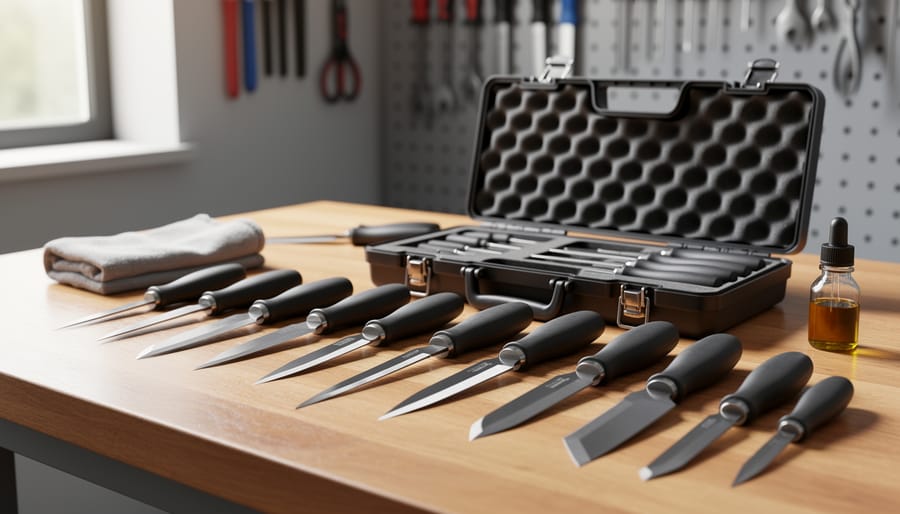
Carbon steel tools demand respect and a bit of regular care, but the routine is simpler than you might think. Treat your Japanese tools well, and they’ll serve you for decades, many gardeners pass heirloom tools down through generations.
The biggest enemy of carbon steel is moisture. After each gardening session, wipe down your tools with a dry cloth to remove soil and plant residue. If mud is caked on, rinse briefly with water and dry immediately. Leaving tools damp overnight invites rust, which can pit the blade and compromise its edge.
Here’s your basic maintenance routine:
- Clean the blade with a stiff brush or cloth to remove all soil and sap immediately after use.
- Dry thoroughly with a clean towel, paying special attention to the junction between blade and handle where moisture hides.
- Apply a thin coat of camellia oil, mineral oil, or food-grade machine oil to the blade using a soft cloth. This creates a protective barrier against humidity.
- Store tools in a dry location, preferably hanging or in a well-ventilated toolbox. Never leave them sitting on damp ground or concrete.
Sharpening keeps your tools performing at their best. Most Japanese gardening tools arrive sharp from the maker, but edges dull with use. A whetstone works beautifully for maintaining that keen edge. Soak the stone for ten minutes, then hold the blade at roughly a 15-degree angle and draw it across the stone in smooth, consistent strokes. Work both sides evenly until you can feel a burr along the edge, then flip and repeat. Finish with a few lighter passes to remove the burr.
During winter storage, give tools an extra-generous oil coat. Some gardeners wrap blades in oiled cloth or waxed paper for added protection during humid months.
This care ritual becomes meditative after a while. You’re not just maintaining equipment; you’re honoring the craftsperson who forged it and ensuring your investment continues to make gardening easier for years to come.
Real Gardeners Share Their Experience
When Sarah Chen started her balcony container garden in Seattle, she fought with a standard trowel that kept bending. Her neighbor suggested trying a hori hori, and the difference surprised her. “I could finally slice through compacted potting soil without wrestling the tool,” she says. “The depth markings helped me plant my mediterranean herbs at exactly the right depth, and the serrated edge cut through stubborn roots in seconds.” She found a quality hori hori accessible enough to justify as her first specialty tool purchase.
Mark Peterson from Georgia had spent years battling weeds in his vegetable beds, constantly bent over with a cheap hand weeder. After switching to a nejiri gama, his back thanked him. “The angled blade gets under taproots completely, so I’m not chasing the same dandelions every week,” he explains. The tool also proved invaluable when he needed to deal with pill bugs hiding in mulch crevices, letting him work between raised bed planks without crushing nearby seedlings.
Emma Rodriguez, an experienced gardener in California, bought niwashi pruning shears after years using standard secateurs. She noticed immediately that her rose canes showed cleaner cuts with less crushing. “When I’m harvesting herbs or applying neem oil treatments and need to prune damaged leaves, the lightweight design means my hand doesn’t cramp after twenty minutes,” she shares. She appreciated that she didn’t need the most expensive option to see real improvements in her daily gardening tasks.
Each gardener started with one tool that addressed a specific frustration, then gradually added others as they saw practical results in their own gardens.
Japanese gardening tools aren’t just purchases, they’re partnerships with your garden that can last decades. While the initial investment might feel significant, these tools transform everyday tasks into moments of genuine satisfaction. The weight, the balance, the way a sharp blade glides through soil or stems: these aren’t luxuries, they’re what make gardening feel less like work and more like the creative practice it should be.
If you’re ready to experience the difference, start with a single tool rather than a complete set. The hori hori makes an excellent first choice because of its versatility, weeding, transplanting, dividing perennials, even cutting twine. Use it for a season, notice how it changes your approach to garden tasks, then add another tool that addresses your specific needs.
Remember that you’re joining a community of gardeners who’ve discovered these tools and love sharing what works. Don’t hesitate to ask questions at your local garden club or online forums. Someone who’s already made the switch can offer real insights about which tools suit your garden type and style.
Start where you are, with what calls to you, and build your collection thoughtfully over time.