
How to Prepare Asparagus for Cooking in 4 Easy Steps
Preparing asparagus for cooking takes just four simple steps: select firm spears with tight tips, rinse them under cold water, snap off the woody ends, and peel thick stalks if needed. The entire process requires less than five minutes and transforms garden-fresh or store-bought asparagus into ready-to-cook spears that will deliver tender, flavorful results no matter which cooking method you choose.
If you’ve been growing asparagus in your raised garden bed or just picked up a bundle at the market, proper preparation makes all the difference between crisp, delicious spears and tough, stringy disappointments. The good news? Asparagus practically tells you where to trim it. When you bend each stalk near the bottom, it naturally breaks at exactly the point where tender meets woody, a foolproof technique recommended by Canada’s food guide that takes the guesswork out of prep work.
Many gardeners who harvest their own asparagus discover that freshly cut spears need the same careful handling as any other produce. Health Canada advises rinsing vegetables only right before you prepare them, never in advance, and skipping soap or cleaning products entirely. This keeps your asparagus fresh and safe without introducing unnecessary chemicals or moisture that can speed spoilage.
Whether you’re planning to blanch, roast, grill, or sauté your asparagus, these four preparation steps set you up for success every time.
What You’ll Need to Prepare Asparagus
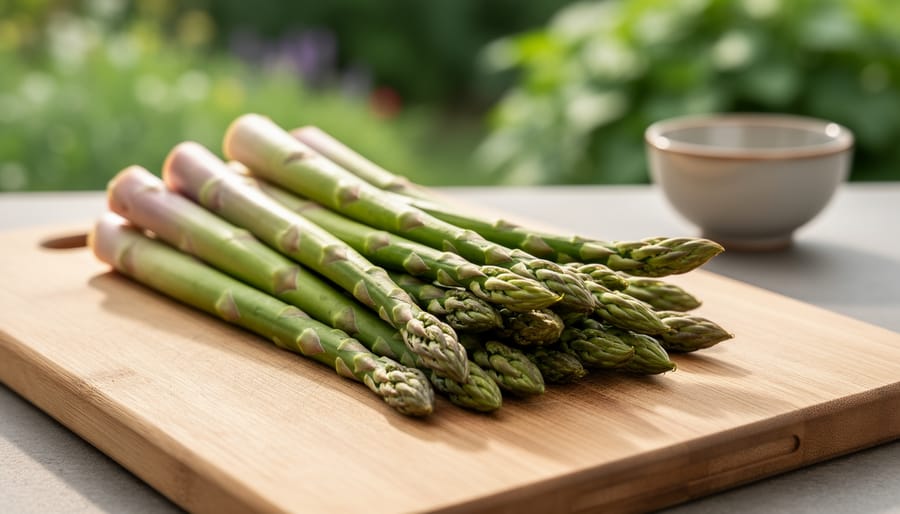
Getting your asparagus ready to cook doesn’t require fancy equipment. If you’re working with spears fresh from your own garden, harvested when they’re about the thickness of a pencil and 6 to 8 inches tall, you already have the best starting point. Market shoppers, look for asparagus that are crisp with bright green spears and tightly closed tips, signs they were recently cut and properly handled.
Here’s what you’ll need:
- Fresh asparagus (about 1 to 2 pounds for most recipes)
- Colander or large bowl for rinsing
- Cutting board (optional, for knife trimming)
- Sharp knife (optional, if you prefer cutting over snapping)
- Vegetable peeler (optional, for thick spears)
- Clean kitchen towel or paper towels for drying
That’s genuinely all you need. The simplicity is part of what makes asparagus such a garden-to-table favorite. Most gardeners find they can prep an entire bunch in under five minutes using just their hands and a colander. The snap method for removing woody ends requires no tools at all, which is handy when you’re working through a bumper crop during peak harvest season in late April through June.
If you plan to peel very thick spears, typically those wider than your thumb, add a vegetable peeler to your counter. Otherwise, the basic setup handles thin, medium, and most thick asparagus beautifully. Your focus should be on the quality of the spears themselves rather than the tools, since fresh asparagus with tightly closed tips prepares faster and cooks more evenly than older stalks.
Before You Start: Safety and Freshness Tips
Before you handle your asparagus, it’s worth knowing a few safety and freshness basics that keep your preparation clean and preserve those delicate spears. Health Canada’s food guide recommends you rinse only before preparing produce, not days in advance, because moisture accelerates spoilage.
When selecting or checking stored asparagus, look for crisp spears with bright green color and tightly closed tips. If your bunch shows limp stalks, slimy patches, or tips that have opened and turned brown, it’s time to discard them, no amount of preparation will restore quality lost to age. Handle asparagus gently during prep, especially the tender tips, which bruise easily and can turn mushy when cooked. A light touch when rinsing and trimming keeps those delicate crowns intact and appealing on the plate.
4 Simple Steps to Prepare Asparagus for Any Cooking Method
Step 1: Select Fresh, Quality Asparagus
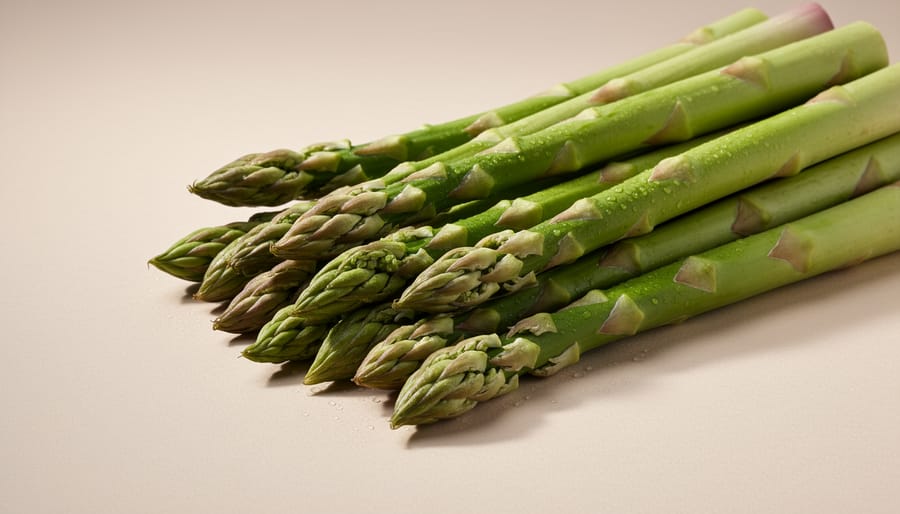
Quality asparagus transforms good dishes into great ones, and spotting the best spears takes just seconds once you know what to look for. According to Canada’s food guide, choose asparagus that are crisp with bright green spears and tightly closed tips. These three signs tell you the asparagus was recently harvested and still packed with moisture and flavor.
Hold a spear gently near the tip. Fresh asparagus should feel firm and snap cleanly if you apply light pressure. Avoid spears with wilted tips, wrinkled stems, or those that bend limply when held horizontally. The color should be vibrant green from tip to base, though a slight purple tinge near the tips is normal in some varieties.
Spring asparagus from local markets often arrives within hours of cutting, giving you the crispest spears with minimal woody growth at the base. Home gardeners get an edge here: cutting your own asparagus at dawn, when sugars are highest, means you can prepare it within minutes of harvest. Whether you grow Jersey Knight, Mary Washington, or Purple Passion varieties, the selection principles stay the same.
Starting with quality spears means less waste when you trim and easier cooking overall. Thick spears hold moisture better for grilling or roasting, while pencil-thin stalks cook faster and need minimal trimming. Choose thickness based on your planned cooking method, but always insist on that crisp snap and those tight tips.
Step 2: Rinse Under Cold Water
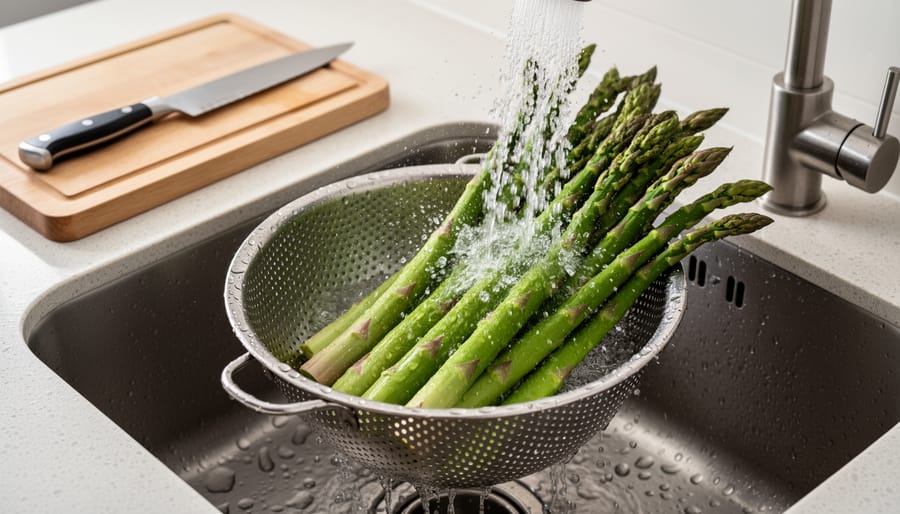
Hold your fresh asparagus spears under cold running water and let the stream flow over them, turning each spear to reach all sides. Cold water is key here, it helps preserve the crispness of the spears and keeps the delicate tips from going limp. As you rinse, gently rub your fingers along the length of each spear, paying special attention to the small scale-like leaves where sand and grit love to hide. These tiny pockets can trap soil from the garden or field, so take an extra moment to make sure they’re clean.
Health Canada recommends rinsing produce only right before you prepare it, not when you first bring it home. This timing matters because moisture during storage can encourage mold growth and speed up spoilage. If you harvested your asparagus this morning or picked it up at the farmers market, resist the urge to wash it immediately. Store it unwashed in the refrigerator, then rinse just before you’re ready to trim and cook.
Handle the tender tips gently during rinsing, they bruise easily and can break off if you’re too rough. A light touch is all you need to remove any lingering dirt or debris.
Step 3: Trim the Woody Ends
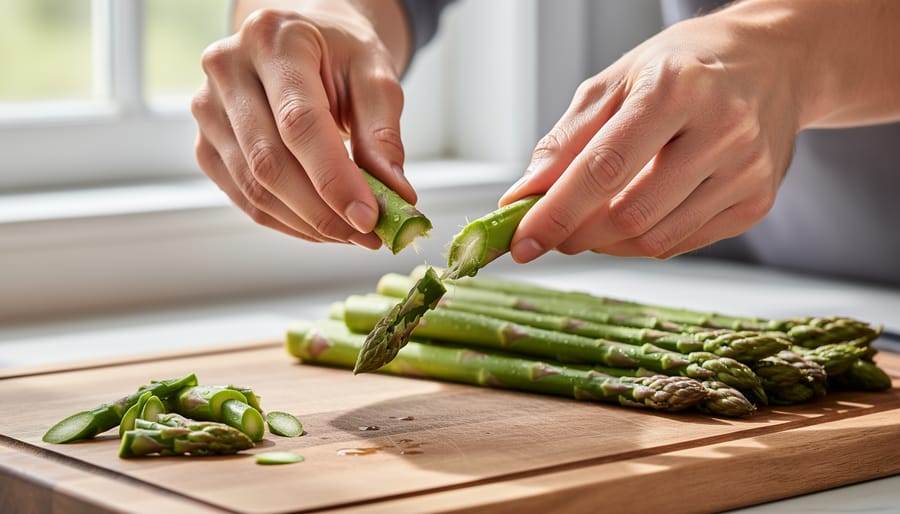
Grab each asparagus spear at both ends, one hand near the tip, one hand near the bottom, and gently bend the stalk. It’ll snap until it breaks naturally at the exact point where the tender portion meets the woody base. This simple method works because the spear knows its own anatomy better than any measuring guide.
The break point varies by thickness and freshness, which is why the snap method beats guessing with a knife. Thick spears might break two to three inches from the bottom, while thinner ones break closer to one inch. You’ll feel a clean snap when you’ve found the right spot.
If you prefer precision or need uniform lengths for presentation, use a knife instead. Line up several spears on your cutting board and slice them all at once, about one to two inches from the bottom, using the first snapped spear as your guide.
Don’t toss those woody ends in the trash. Composting them returns nutrients to your garden soil, completing the circle from bed to table. If you don’t compost, save the ends to make vegetable stock, they’ll add a subtle earthy flavor before you strain them out.
Step 4: Optional Peeling for Thick Spears
Peeling asparagus is optional, but it makes sense for particularly thick spears or when you want a more uniform, tender texture throughout the stalk. Thick asparagus often has a tougher outer layer on the lower portion that remains fibrous even after cooking, while the tip and upper section cook through beautifully. Peeling removes that outer skin and ensures the entire spear becomes tender at the same rate.
You’ll need a standard vegetable peeler for this task. Hold the asparagus spear firmly near the tip with one hand, then use the peeler to remove thin strips of the outer layer, working from just below the tip down to the cut end. Focus on the bottom two-thirds of the spear, the top third and the delicate tip don’t need peeling. Rotate the spear as you work to peel all sides evenly. The peeled surface should look pale green and slightly glossy.
This step is entirely based on personal preference and the thickness of your spears. Thin asparagus rarely needs peeling, while spears thicker than your thumb benefit most from it. If you’ve just harvested asparagus from your garden and notice the stalks vary widely in diameter, peeling the thickest ones creates more even cooking across the batch. Some cooks peel asparagus for elegant presentations or specific recipes where consistent texture matters, while others skip it altogether and simply cook thick spears a bit longer.
Once peeled, your asparagus is fully prepared and ready for whichever cooking method you choose.
How to Tell Your Asparagus Is Ready to Cook
Your asparagus is ready to cook when each spear shows three clear signs of proper preparation. First, the stalks should be clean with no visible dirt or grit clinging to the scales. Second, every spear should be trimmed at its natural break point where the tender upper portion meets the woody base, you’ll notice the trimmed ends look fresh rather than dried or discolored. If you’ve chosen to peel thick spears, the bottom two-thirds should show a smooth, pale surface beneath the outer layer.
Run your fingers along a prepared spear, it should feel smooth and slightly damp from rinsing, not slimy or excessively wet. The tips should remain intact and tightly closed, not mushy or falling apart. When you line up several spears side by side, they should be roughly the same length, which ensures they’ll cook evenly whether you roast, grill, sauté, or steam them.
At this point, you’re ready to choose your cooking method. If you’re planning to use asparagus in a salad or want to lock in that vibrant green color, blanching is an excellent first step. Drop your prepared spears into salted boiling water for 30 seconds to 1 minute if they’re thin, or 1 to 2 minutes for thicker stalks, then plunge them into ice water to stop the cooking. Otherwise, your clean, trimmed asparagus can go straight into your chosen cooking vessel.
Common Questions About Preparing Asparagus
Do I need to peel asparagus?
Peeling is optional and only recommended for very thick spears where the outer layer feels tough or fibrous. Most medium-sized asparagus from your garden or market doesn’t require peeling, trimming the woody ends is usually enough.
How far up should I trim the asparagus?
The snap method naturally finds the right spot for you. Hold each spear at both ends and bend near the bottom, it’ll break exactly where the tender part meets the woody section, typically one to two inches from the base.
Can I prepare asparagus in advance?
Yes, you can rinse and trim asparagus a few hours ahead. Store the prepared spears upright in a jar with an inch of water in the refrigerator, covered loosely with a plastic bag, until you’re ready to cook.
Should I blanch asparagus before other cooking methods?
Blanching isn’t necessary for preparation, but it’s useful if you plan to freeze asparagus or want to lock in color before grilling. Blanch 30 seconds to 1 minute for thin spears or 1 to 2 minutes for thicker ones, then plunge into ice water to stop cooking.
Think of asparagus preparation the same way you’d approach fresh herbs from your garden, gentle handling preserves quality. Just as you wouldn’t over-wash delicate Mediterranean herbs like basil or oregano, you want to rinse asparagus only right before use to maintain crispness. If you’re growing asparagus and notice pests affecting your harvest, a treatment like neem oil can protect spears while they’re still developing in the bed, ensuring you start with clean, healthy produce at harvest time.