
Electro Culture Gardening: Ancient Technique or Modern Myth?
Electroculture gardening claims that metal antennas, copper wires, and magnets can harness atmospheric electricity to boost plant growth by 30-300%, according to viral videos flooding social media in 2026. You’ve probably seen the spiraled copper stakes, the dramatic before-and-after photos, and gardeners swearing their tomatoes doubled in size. But before you wire up your raised beds, you deserve the full story.
The technique isn’t new. French and European farmers experimented with “electroculture” in the 1700s and 1800s, placing iron rods in fields to capture atmospheric energy. Some reported remarkable harvests. Others saw nothing. By the early 1900s, most scientists had moved on, unable to replicate consistent results or explain the mechanism convincingly.
Fast forward to today. TikTok gardeners are reviving these methods with copper coils, pyramid structures, and magnetic arrays. The Toronto Electroculture Gardening Expo in April 2026 drew thousands of curious growers, many clutching homemade antenna designs. Some attendees shared genuinely impressive harvests. Others admitted they’d seen zero difference.
Here’s what makes this tricky: we don’t have rigorous, peer-reviewed studies from 2026 proving electroculture works at scale. The historical research is patchy and often contradictory. Yet real gardeners are reporting real results, which shouldn’t be dismissed outright.
This article cuts through the hype. You’ll learn exactly what electroculture is, what the limited science actually says, why some gardeners swear by it while others call it pseudoscience, and how to test it yourself without wasting money. We talked to five home gardeners who tried electroculture in their 2025-2026 growing seasons. Their honest experiences, both successes and failures, will help you decide whether spiraled copper belongs in your garden or your recycling bin.
What Exactly Is Electro Culture Gardening?
At its core, electro culture gardening is the practice of using electricity, electromagnetic fields, or metal structures to stimulate plant growth. Proponents believe that by tapping into atmospheric electricity or creating electromagnetic environments around plants, they can boost yields, accelerate growth rates, and improve overall plant health, all without chemical fertilizers or intensive inputs.
The basic premise rests on the idea that plants naturally interact with the Earth’s electromagnetic field and atmospheric electrical charges. Advocates argue that by amplifying or directing these forces through simple installations, copper wire spirals, metal antennas, grounding stakes, or magnetic devices, gardeners can harness energy that’s already present in the environment. Think of it as trying to tune your garden into nature’s electrical frequency.
- Electro Culture
- The practice of using electrical or electromagnetic methods to enhance plant growth, rooted in historical experiments and recently revived through social media gardening communities.
- Atmospheric Electricity
- The natural electrical charge present in the air and environment, which some gardeners believe can be captured and directed toward plants to stimulate growth.
- Electromagnetic Stimulation
- The application of electromagnetic fields around plants, typically through metal structures or magnets, with the claimed effect of improving nutrient uptake and vigor.
- Copper Antennas
- Spiral-shaped copper wire structures inserted near plants, considered the most popular DIY electro culture method for supposedly collecting atmospheric energy and channeling it to roots.
Common methods you’ll encounter include wrapping copper wire in spirals around wooden stakes near plants, creating wire grids or baskets that surround garden beds, installing vertical antenna-like structures throughout growing areas, and placing magnets or magnetic tape around pots and raised beds. Some gardeners also use grounding rods connected to metal wires that run through soil.
The techniques vary widely in complexity, from a simple copper coil that takes five minutes to install to elaborate antenna arrays and wired garden layouts. Most methods share the same underlying theory: that metal structures can interact with electromagnetic forces in ways that benefit nearby plants, though exactly how this works remains a subject of debate and experimentation.
The Historical Roots: From 18th Century Experiments to Today
The roots of electro culture gardening stretch back further than most people realize. In the 1770s, French scientist Jean-Antoine Nollet published experiments suggesting that electricity could stimulate plant growth. He wasn’t alone. Scottish physicist Andrew Main and later German researcher Gustav Kruger conducted similar tests, applying electrical currents to soil and reporting faster germination and bigger harvests.
The late 1800s saw a wave of agricultural electricity experiments across Europe and North America. Researchers installed wired frameworks over crop fields and sent currents through the soil, testing whether electromagnetic energy could replace or enhance fertilizers. Results varied wildly. Some researchers reported yield increases of 30 to 50 percent. Others found no measurable difference at all.
By the early 1900s, commercial enthusiasm peaked. A few farms in England and the United States installed elaborate electrical systems, hoping to revolutionize food production. But the practice faded quickly. Most mainstream agricultural scientists concluded that electro culture does not improve yield reliably enough to justify the cost and complexity. The technique retreated to the margins.
Interest revived sporadically throughout the 20th century. Small groups of alternative agriculture advocates tried different approaches, including magnetic field generators and antenna-like copper structures. Yet electro culture remained largely forgotten by conventional farming, absent from textbooks and agricultural extension programs.
Then came 2026. Social media platforms exploded with videos of backyard gardeners wrapping copper wire around tomato plants and claiming remarkable results. Influencers shared side-by-side photos of supposedly electrified gardens versus standard beds. The hashtags spread rapidly, and suddenly thousands of home gardeners worldwide were experimenting with antennas, wire grids, and grounding stakes.
The current resurgence blends historical curiosity with modern DIY culture. Today’s electro culture enthusiasts are rediscovering century-old techniques, adapting them with readily available materials from hardware stores, and sharing their trials online in real time. Whether this revival will produce different outcomes than past attempts remains an open question, one that gardeners are actively testing in their own plots right now.

How Gardeners Are Practicing Electro Culture in 2026
The Copper Antenna Method
The copper antenna method has become the signature electro culture technique circulating on social media and in gardening forums. Gardeners report it as the simplest entry point for experimentation.
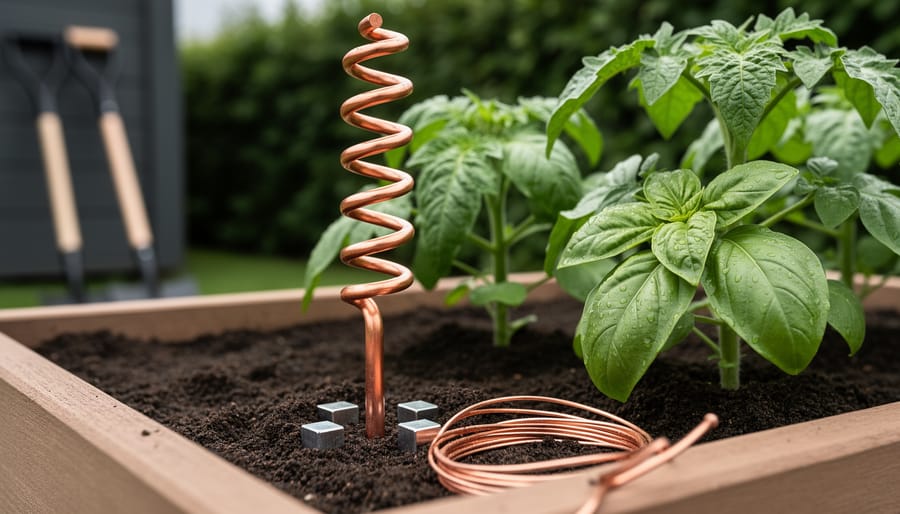
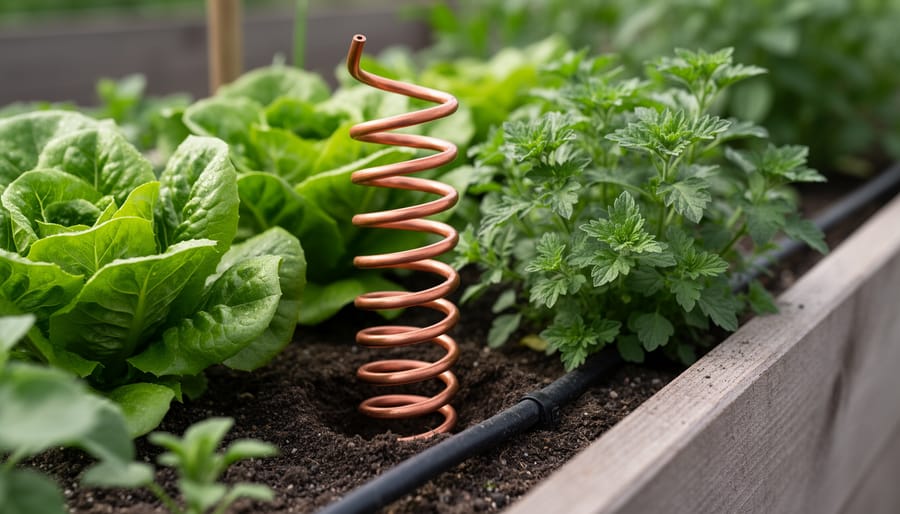
To create a basic copper antenna, you’ll need bare copper wire (14 or 16 gauge works well), typically cut to lengths between 3 and 6 feet. Wind the wire around a wooden dowel or broom handle to form a loose spiral, leaving 6-8 inches straight at the bottom to insert into soil. The spiral diameter usually ranges from 2 to 4 inches, and most practitioners create 4-6 coils.
Once formed, push the straight end of your copper spiral into the soil 4-6 inches deep, positioning it 2-4 inches from the plant’s main stem. Some gardeners orient the spiral pointing north or align it with the sun’s path, though no consistent rules exist across the community. The spiral should stand upright beside the plant throughout its growing season.
Practitioners claim the copper structure attracts atmospheric electricity and beneficial electromagnetic frequencies, channeling energy into the soil and root zone. They suggest one antenna per plant for tomatoes, peppers and larger vegetables, while smaller plants like lettuce might share one antenna among several plants.
The materials cost just a few dollars per antenna, making this an accessible experiment. Whether the copper truly affects growth remains scientifically unproven, but the low investment appeals to curious gardeners willing to test the method in their own beds.
Wire Grid and Basket Approaches
Beyond individual antennas, some gardeners install wire grids suspended a few inches above their beds. The idea is that a horizontal copper or galvanized wire mesh creates a broader electromagnetic field that covers multiple plants at once. Practitioners typically string 12- to 14-gauge wire in a grid pattern across a simple wooden frame, then hang it on stakes about 6 to 12 inches above the canopy. Proponents claim this setup captures atmospheric energy more efficiently than single-plant antennas and reduces the labor of placing copper spirals around each seedling.
Another variation involves wire baskets placed directly around root zones. Some gardeners wrap copper or aluminum wire in loose coils around the base of larger plants like tomatoes or peppers, tucking the wire a few inches into the soil. Others weave wire into cylindrical cages that surround transplants, combining structural support with the supposed electromagnetic benefit. These baskets are easier to move than grids and let you target specific high-value crops without committing your entire garden.
Both methods use inexpensive materials, most require only wire, stakes, and basic tools, but they demand more setup time than a single antenna. Whether the grid or basket actually delivers measurable results remains a matter of debate, but gardeners experimenting with electro culture often try one or both to see which fits their layout and workflow.
What the Science Actually Says
The promise of electro culture gardening sounds appealing: simple metal structures that boost your harvest without chemicals or extra effort. But what does the scientific community actually say about using atmospheric electricity and electromagnetic fields to enhance plant growth?
The honest answer is complicated. While plants do respond to electrical phenomena in nature (lightning delivers nitrogen to soil, and plants generate their own bioelectrical signals), the leap to backyard copper antennas improving yields lacks solid scientific backing. Most of the historical research dates back to the late 1800s and early 1900s, when scientists experimented with applying electrical currents directly to soil or plants. Some of these early studies reported modest improvements in germination or growth rates, but the experiments were often small-scale, poorly controlled by modern standards, and difficult to replicate consistently.
Plants are electrical beings that generate measurable bioelectric fields during growth, but harnessing atmospheric electricity for agricultural benefit remains scientifically unproven at practical scales.
Here’s where things get murky: mainstream agricultural science hasn’t embraced electro culture techniques, and there’s a straightforward reason why. For a practice to gain scientific acceptance, it needs peer-reviewed, replicated studies showing measurable, consistent results under controlled conditions. Electro culture lacks this foundation in 2026. University agricultural departments and commercial farming operations, which eagerly adopt proven innovations like drip irrigation or precision fertilization, haven’t integrated copper spirals or antenna arrays into their recommendations. This absence isn’t necessarily proof that electro culture doesn’t work, but it does signal that the evidence isn’t compelling enough to convince researchers who study plant physiology for a living.
That said, the lack of recent rigorous studies doesn’t automatically mean every gardener reporting success is imagining results. Several factors muddy the waters. Copper itself can provide trace nutrients that some soils lack. Metal structures might alter soil temperature or moisture patterns slightly. The act of paying closer attention to plants (which happens when you’re running an experiment) often improves care and outcomes. These variables make it genuinely difficult to isolate whether any observed benefits come from electromagnetic effects or from other mundane factors.
The scientific consensus, such as it exists, suggests skepticism without outright dismissal. Plant scientists acknowledge that electromagnetic fields can influence biological processes at the cellular level in laboratory settings. Scaling those effects to a backyard garden using passive metal structures is where the theory becomes shaky. Without controlled trials comparing electro culture methods against standard practices while accounting for soil conditions, weather, and plant varieties, we’re left with intriguing possibilities rather than proven techniques.
What we can say definitively: electro culture won’t replace sunlight, water, healthy soil, or good gardening fundamentals. Those remain non-negotiable.
Real Gardeners Share Their Electro Culture Experiences
When gardeners share their electro culture experiences online, the results paint a decidedly mixed picture, which is exactly what you’d expect from an experimental technique without standardized protocols.
Maria, a home gardener in Oregon, installed copper spiral antennas around her tomato plants last season and swears the difference was dramatic. “I’ve grown the same heirloom variety for six years in the same beds,” she explains. “Last year with the copper antennas, I got nearly double the tomatoes, and they ripened two weeks earlier.” She acknowledges she can’t prove causation, but plans to expand her electro culture setup this year.
Contrast that with James from North Carolina, who tried identical copper spirals on half his pepper plants while leaving the other half as controls. “I measured everything, height, fruit count, weight at harvest,” he says. “After four months, there was zero measurable difference. The plants looked identical.” He suspects confirmation bias drives many positive reports but doesn’t dismiss the possibility that soil conditions or climate might matter.
Rachel in Colorado took a middle path, experimenting with wire baskets around her raised bed carrots. She noticed slightly bushier tops but couldn’t detect any difference in root size or flavor. “It didn’t hurt anything, and it was interesting to try,” she notes. “But I wouldn’t count on it to solve actual growing problems.” She emphasizes that basics like soil quality, proper watering, and how you fill raised beds matter far more than experimental techniques.
The most enthusiastic accounts often come from gardeners combining electro culture with other improvements, new fertilizers, better irrigation, amended soil, making it impossible to isolate what’s actually working. Meanwhile, skeptical gardeners point out that attentive care itself (regardless of copper wire) often produces better results simply because you’re watching plants more closely.
What’s clear from these varied experiences is that electro culture gardening remains firmly in the realm of personal experimentation rather than proven practice, with honest gardeners reporting everything from remarkable changes to absolutely nothing at all.

Should You Try Electro Culture in Your Garden?
If you’re intrigued by the electro culture buzz and wondering whether to try it yourself, the good news is that most methods carry minimal risk. Unlike some trendy gardening experiments, you won’t harm your plants by adding a copper wire spiral or antenna near them, copper is non-toxic to soil and plants in these small quantities. The main investment is your time and a bit of curiosity.
Set your expectations realistically. Don’t anticipate miraculous overnight growth or doubling your tomato harvest just because you’ve installed a wire structure. Instead, think of this as a personal experiment that might teach you something about your garden, even if the results aren’t dramatic. The best approach is to run a proper comparison test rather than converting your entire garden at once.
Here’s how to set up a fair test: Choose one type of plant, say, tomatoes or lettuce, and plant at least four of them in similar conditions (same soil, sunlight, watering schedule). Install your electro culture setup on two plants and leave the other two completely alone as controls. Keep detailed notes on growth rates, leaf color, flowering times, and final yield. Photograph both groups weekly so you can compare objectively later. This method helps you see past confirmation bias, where you might unconsciously favor the plants you’ve invested effort in.
- Materials like copper wire cost just a few dollars, making this an affordable experiment.
- Installation is simple and requires no special skills or tools.
- You might discover genuinely interesting patterns in your garden, even if they’re not what you expected.
- The process encourages closer observation of your plants, which benefits any gardener.
- Current scientific evidence doesn’t support dramatic claims, so results may be minimal or nonexistent.
- Setting up structures and monitoring takes time that could go toward proven techniques like outdoor hydroponics or home aquaponics.
- Confirmation bias can make you see improvements that aren’t really there.
- Some sellers push expensive “electro culture kits” that offer nothing beyond basic copper wire.
Watch out for a few pitfalls. Avoid using galvanized or treated metals that might leach harmful substances into your soil, stick with pure copper or untreated steel. Skip any products that make wild promises about tripling yields or claim to replace fertilizer entirely. And don’t neglect proven plant care basics like proper watering, soil health, and pest management with tools like neem oil. Electro culture, even if it works for you, won’t compensate for poor fundamentals.
Ultimately, trying electro culture is a bit like taste-testing a new garden variety: you won’t know how it performs in your specific conditions until you grow it yourself. Keep an open mind, document what you observe, and share your honest findings with fellow gardeners.
Frequently Asked Questions About Electro Culture
**Is electro culture gardening safe for plants and people?**
Most common electro culture methods using copper wire, wooden stakes, and simple antenna structures pose minimal safety risk to both plants and gardeners. The materials are inert and won’t introduce toxins into your soil. However, avoid using galvanized metals that might leach zinc, and never connect anything directly to electrical outlets or power sources. The practice relies on atmospheric electricity and ambient electromagnetic fields, not high-voltage currents.
**Can electro culture harm my plants?**
Physical installation can cause minor root disturbance if you’re inserting stakes or wires near established plants, so work carefully. Beyond that, there’s no documented evidence that copper antennas or wire grids damage plants. If you notice wilting or stress after installation, it’s more likely due to accidental root injury during setup than the electro culture method itself.
**Does it work with all types of crops?**
Gardeners experimenting with electro culture report trying it on everything from tomatoes and peppers to root vegetables and herbs. There’s no scientific basis suggesting certain crops respond better than others. If you’re testing the technique, start with fast-growing plants like lettuce or radishes so you can observe any potential differences within a single growing season.
**How much does electro culture cost to try?**
DIY electro culture can be incredibly affordable. Basic copper wire costs around ten to twenty dollars for enough material to create several antennas. Wooden dowels or bamboo stakes add another few dollars. You can start experimenting for under thirty dollars total, which is less than investing in LED grow lights or specialized fertilizers.
**Is electro culture the same as hydroponics or aquaponics?**
No, these are completely different approaches. Hydroponics grows plants in nutrient solutions without soil, while electro culture is simply adding metal structures to conventional soil-based gardens. You can theoretically combine them, but they address entirely different aspects of plant cultivation.
**How long before I see results?**
Most gardeners report observing supposed effects within four to eight weeks during active growing season. For meaningful comparison, grow electro culture plants alongside identical control plants through a full harvest cycle.
So where does that leave you and your garden? Electro culture gardening sits at a fascinating crossroads between historical curiosity, modern viral trends, and good old-fashioned gardening experimentation. Whether copper spirals will revolutionize your tomato harvest remains genuinely unclear, but that uncertainty doesn’t make the practice worthless. Gardening has always been equal parts science and art, systematic observation mixed with a willingness to try something new and see what happens.
If you’re intrigued, set up a simple comparison test this season. The materials are inexpensive, the methods are generally harmless, and you’ll learn something valuable regardless of the outcome. Maybe you’ll discover that your particular soil, climate, and plant varieties respond in unexpected ways. Maybe you’ll confirm what mainstream science suggests. Either way, you’ll have engaged directly with a gardening question instead of just scrolling past it.
The broader cultural interest in electro culture continues to grow. Events like Toronto’s Rhythm gathering on July 24, 2026, at 141 Bathurst St. (billing itself as “electro culture under one roof” for $15+) show that these ideas are entering mainstream conversation, sparking curiosity beyond gardening circles alone.
At The Garden Gates, we’re here to help you separate genuine techniques from hollow hype. Share your electro culture experiments with our community. Document what worked, what didn’t, and what surprised you. Real gardener experiences matter more than any viral claim, and your findings help all of us grow better gardens together.