
How to Choose the Right Dimensions for a Tall Raised Garden Bed (and Build It Without Wasting Wood)
A good raised garden bed is 4 feet wide, 8 feet long, and 10 to 12 inches tall. That size works because you can reach the center of the bed from either side without ever stepping on the soil, and it matches standard lumber lengths, so you’ll make few cuts and waste almost nothing. Most beds go together in an afternoon with basic tools, and the job is beginner-friendly.
Why those numbers? Width is the one to guard. Past 4 feet, most people can’t comfortably reach the middle, and you end up kneeling on the soil you just loosened. Height is flexible: 6 inches is enough for shallow greens, 12 inches suits tomatoes and carrots, and 24 to 30 inches puts the garden within easy reach if bending is a struggle. Length is simply a matter of the space you have, so 3, 4, 6, or 8 feet all work.
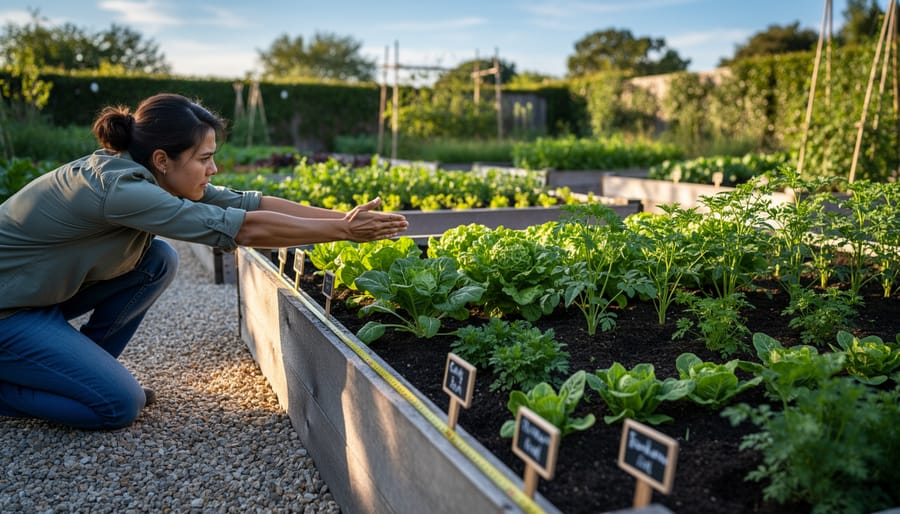
Here’s a quick tip to try before you buy a single board. Lay a garden hose or a few sticks on the ground in your planned footprint, then stand at the edge and reach toward the middle. If your fingertips land comfortably past the center line, you’ve found your width.
Below, you’ll see how to adjust these dimensions for your crops, your space, and your body, plus the tools, materials, safety checks, and step-by-step build to get it done right.
The Quick Answer: Standard Dimensions for Tall Raised Beds
Width: Reach Matters More Than You Think
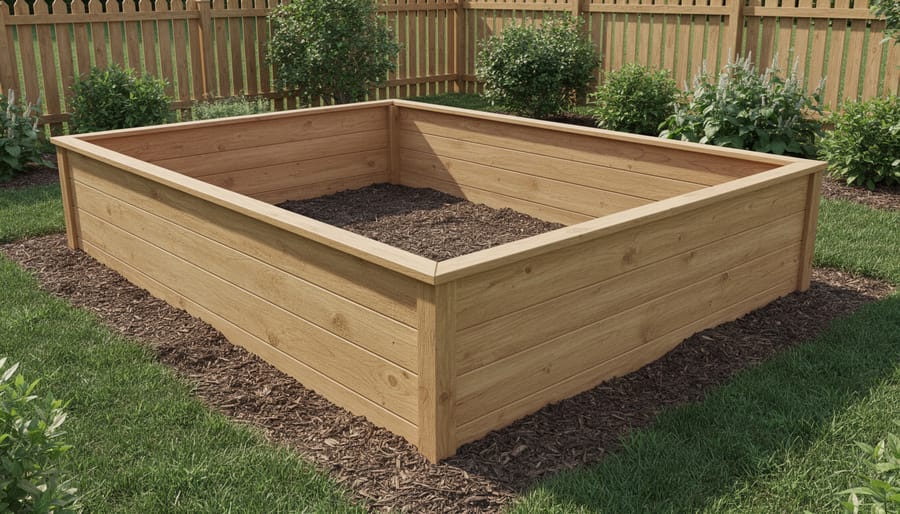
Here’s the simple truth about bed width: it’s all about your arm length. If you can comfortably reach the center of the bed, you never have to step on the soil. Stepping on it squashes the air out of the dirt, and compacted soil makes it harder for roots to grow.
For a bed you can walk around, 3 to 4 feet wide is the sweet spot. That lets you reach in from both sides and meet in the middle, whether you’re weeding, planting, or harvesting. Go wider than 4 feet and you’ll start leaning, stretching, and probably wishing you hadn’t.
A bed pushed up against a wall or fence is a different story. You can only reach from one side, so keep it to 2 to 2.5 feet wide.
Try this: stand where your bed will go and stretch one arm out in front of you, as if you were reaching toward the middle of the bed. If you can comfortably touch the spot without straining, that’s your width.
Height: How Tall Is Tall Enough?
Height changes three things at once: how much you bend, how much soil you need, and what the bed costs.
A 24-inch bed is a good starting point. It cuts a lot of the stooping you’d do at ground level, and it’s still affordable to fill. Step up to 30 to 36 inches and the bed sits near waist height, which means you can tend plants with a fairly straight back. That’s a big comfort gain if you garden for long stretches.
Taller beds do cost more. Every extra six inches adds lumber and a lot more soil, so the filling bill climbs fast. If you need to sit while you garden, or you want to reach from a wheelchair or stool, go higher still, or build a narrower bed so you can reach the middle.
You also don’t have to fill every inch with premium soil. A layer of logs, branches, or leaves at the bottom takes up space cheaply as it breaks down.
Then there’s root depth. Lettuce, radishes, and most herbs are happy in 6 to 8 inches of soil. Tomatoes, peppers, and beans like 12 inches or more. Root crops need room to grow down, so check guidance on raised bed depth for carrots before you settle on a height.
Matching Your Bed Size to Your Space, Crops, and Body
A Gardener’s Story: How One Small Change Saved a Back
Picture a gardener I’ll call Margaret, a longtime community member who spent years tending a 12-inch bed. Every season she knelt and bent, and every season her back complained a little louder. Eventually she nearly gave up growing tomatoes altogether.
Then she rebuilt, raising the bed to 30 inches. Suddenly she could stand at the edge, prune without crouching, and rest a hand on the frame when she needed a breather. She’s still harvesting well into her seventies, and she credits that one change.
Her lesson is simple: height decides how long you can enjoy the work. Before you cut a single board, ask yourself:
- How far can you comfortably reach?
- How much sun does the spot get?
- How wide are your paths (aim for 2 to 3 feet)?
- Do you need wheelchair or seated access?
- What will you grow?
Your answers shape every dimension that follows, so jot them down before you head to the lumber aisle.
Planning for Pathways, Sunlight, and Small Spaces
Before you settle on dimensions, think about the space around the bed. Leave pathways at least 2 feet wide so you can kneel or walk comfortably, and aim for 3 feet if you plan to push a wheelbarrow. Tight paths turn a fun garden into an obstacle course.
Sunlight matters just as much. Most vegetables want six to eight hours of direct sun, so watch your yard for a day before choosing a spot. A long bed running north to south usually gets even light on both sides. Since tall beds cast longer shadows, keep them from blocking shorter plants nearby.
Small spaces call for scaled-down thinking. On a balcony or patio, a bed 2 feet wide and 3 or 4 feet long still grows plenty of salad greens, herbs, and peppers. Measure your space first, then work backward.
Finally, get to know soil volume, which is simply how much soil your bed holds. Multiply length by width by height, all in feet, to get cubic feet. A 4 by 4 foot bed that’s 2 feet tall holds 32 cubic feet. Knowing that number helps you buy the right amount, and it also tells you how heavy the bed will be once filled and watered.
Tools and Materials for an Efficient Tall Bed Build
Smart Cutting: Designing Around Standard Lumber Lengths
Lumber usually comes in 8-foot lengths, so smart planning starts there. For a 4-by-8-foot bed, each long side is one whole board, and each 4-foot end comes from a single board cut in half. Cut one 8-footer at the 4-foot mark and you get two matching ends with zero scraps.
A 4-by-4-foot bed is just as tidy. Each 8-foot board cuts into two 4-foot pieces, so four sides need only two boards per layer.
Here’s a quick cut plan for a 4-by-4 bed that’s 30 inches tall using 10-inch-wide boards:
1. Three layers of boards give you 30 inches (3 x 10).
2. Each layer needs four 4-foot pieces, so that’s 12 pieces total.
3. Each 8-footer yields two pieces, so you need 6 boards and make 6 cuts.
Stacking boards like this builds height without any extra cutting, since every layer repeats the same pieces. Measure twice, cut once, and your leftover pile stays refreshingly small.
Safety First: Before You Cut, Lift, or Fill
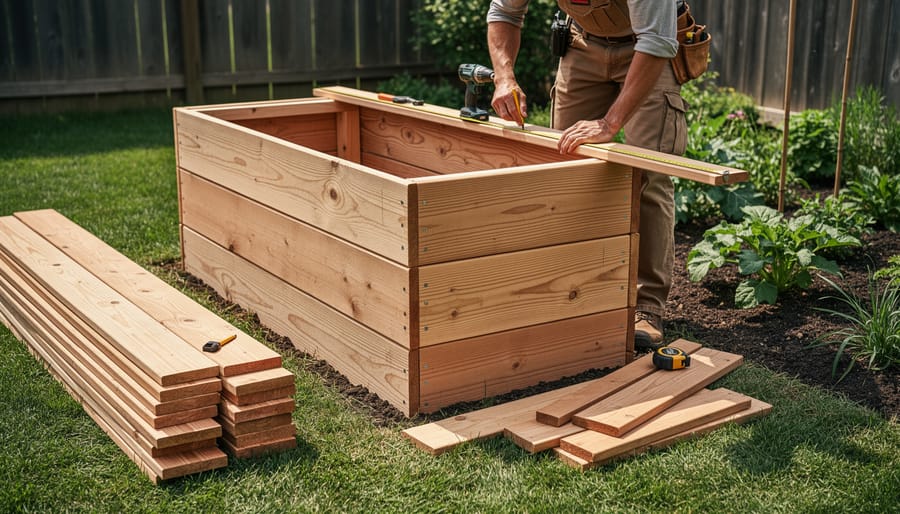
A few minutes of safety prep keeps a fun weekend project from turning into a trip to urgent care. Wear safety glasses and ear protection whenever you run a saw, and add a dust mask when cutting. Clamp each board before you cut, keep your hands well clear of the blade line, and unplug or remove the battery when you change blades.
Before you dig a footprint or drive in anchor stakes, find out what’s underground. Gas, electric, and water lines can sit shallower than you’d expect, and hitting one is dangerous and expensive.
Choose your lumber with food in mind. Skip older pressure-treated wood, since some formulas may leach chemicals into the soil, and go with untreated cedar, other naturally rot-resistant wood, or galvanized metal for beds where you’ll grow edibles.
Know when to stop. Pause the build if a frame starts to bow as you add soil, if the ground feels soft or uneven, or if the spot seems unstable under your weight. Fix the bracing, move the bed, or rethink the height before you add another shovelful.
How to Build a Tall Raised Garden Bed, Step by Step
Before you cut a single board, lay a garden hose or string on the ground in the exact outline you have planned. Leave it there for a day. Walk around it, reach toward the middle, and picture pushing a wheelbarrow past. If it feels cramped, adjust now, while changes cost nothing.
Once the outline feels right, here is how to build tall raised beds from that plan:
- Choose your site and level the ground.
- Measure and cut boards to your planned dimensions.
- Assemble the base frame and corner posts.
- Stack and attach the upper tiers.
- Add mid-span raised bed bracing for beds over 4 feet long.
- Line the bottom with hardware cloth if pests are a concern.
- Fill with filler and soil in layers, a method similar to lasagna gardening.
- Water to settle the soil, then top off.
Checking Your Work and What to Do Next
Once the last board is screwed in, take a few minutes to check your work. Lay a level across the top rails in both directions, then measure the two diagonals corner to corner. If the numbers match, your bed is square. Give each wall a firm push; a sturdy frame shouldn’t flex or wobble.
Now put your reach to the test. Stand at the edge and stretch toward the center, just as you did when planning. If you can’t comfortably touch the middle, you’ll know whether you need a narrower bed next time or a trellis path along one side. Kneel and stand a few times, too. Your back will tell you if the height is right.
Fill the bed, then water it deeply. Soil settles, often by several inches, so top it off with compost and water again. Don’t be surprised if you do this twice.
For your first planting, choose forgiving crops like lettuce, radishes, bush beans, or herbs. Keep an eye out for little visitors, and if you need to manage pill bugs tackle it early. Finally, snap a photo of your finished bed and share it with The Garden Gates community. We’d love to see your build!
Common Questions About Raised Bed Dimensions
Here are quick answers to the questions gardeners ask us most about sizing a bed. Skim for yours, and remember that your own reach and space always get the final say.
How deep does a raised bed need to be for vegetables?
Most vegetables do well with 12 inches of good soil, which covers lettuce, herbs, radishes, and beans. Tomatoes, carrots, and other deep-rooted crops appreciate 18 inches or more, which a tall bed provides easily.
Can a raised bed be too wide?
Yes. Past about 4 feet, you can’t comfortably reach the middle from either side, so you end up stepping into the bed and compacting the soil. If you can only reach from one side, such as against a fence, keep it closer to 2 to 2.5 feet.
How much soil do I need for a 4x8x2-foot bed?
Multiply the three measurements: 4 x 8 x 2 equals 64 cubic feet, which is roughly 2.4 cubic yards. Plan on a little less if you add a filler layer at the bottom, and a little extra to top off after the soil settles.
Do tall beds need a bottom?
Usually not, if the bed sits on soil, because roots and earthworms can reach down into the ground below. On concrete, decks, or balconies, you’ll want a base with drainage holes so water can escape.
A few related questions come up often too. For pathways, leave about 3 feet between beds so you can walk comfortably and turn a wheelbarrow. Building on concrete works well as long as drainage is solid and the surface can handle the weight of wet soil, which gets heavy fast in a tall bed.
Still wondering whether a size will work for you? Try the hose-and-string trick from earlier in this guide before you cut a single board.
Planning the dimensions of a raised garden bed really comes down to a few friendly numbers. Aim for about 3 to 4 feet wide so you can reach the middle, 4 to 8 feet long to match standard boards, and 24 to 36 inches high so your back gets a break. Then bend those numbers to fit your own reach, your yard or balcony, and the crops you can’t wait to grow.
The smartest builds are the ones that respect the lumber. When your plan lines up with 8-foot boards and a handful of simple cuts, you spend less, waste less, and spend your weekend planting instead of sawing.
Now it’s your turn. Grab a tape measure, lay out a hose or string where your bed might go, and see how it feels. Tweak it until it’s comfortable.
We’d love to hear what you come up with. Share your bed size, your cut plan, or your own gardening story with The Garden Gates community, because your experience might be the nudge another gardener needs. Start planning your first tall bed today. Your future harvest is waiting.